By alphacardprocess March 26, 2026
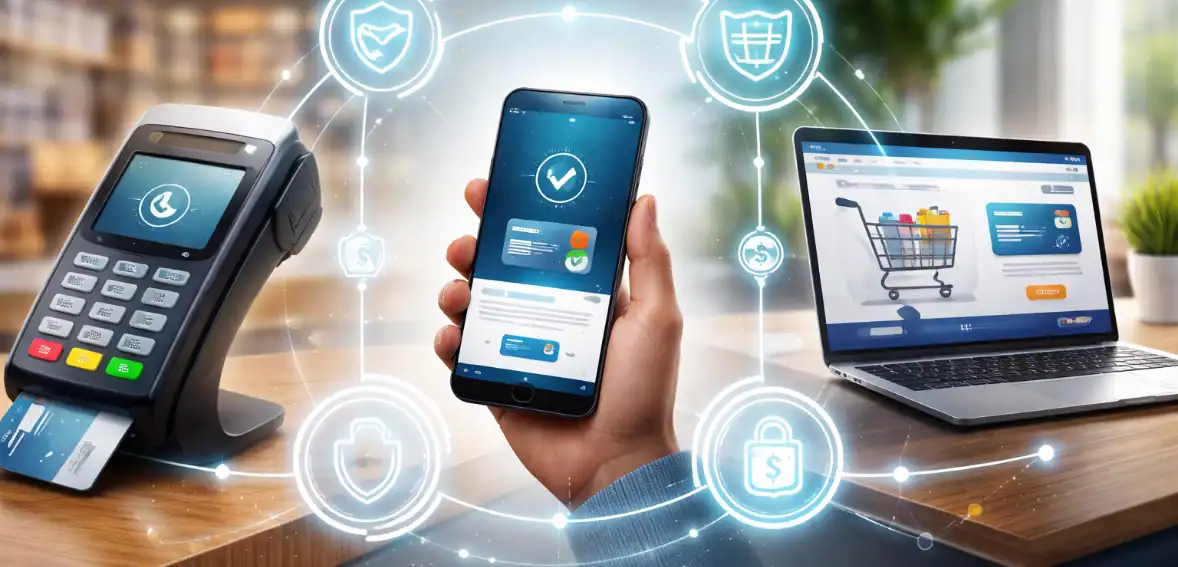
The way customers pay has changed dramatically in recent years. People no longer shop using just one method. A customer might browse products on a mobile phone, compare options on a desktop computer, and complete the purchase inside a physical store. Because of this shift, businesses must support payments across multiple channels while maintaining both convenience and security.
This is where payment tokenization and omnichannel strategies become essential. Businesses today must ensure payment data remains protected while allowing customers to move smoothly between different purchasing environments. At the same time, they must reduce fraud risks, meet compliance standards, and provide fast checkout experiences.
Tokenization helps solve these challenges by replacing sensitive card data with secure digital tokens. These tokens allow payments to be processed safely without exposing real payment details. This makes it possible to deliver seamless experiences across stores, mobile apps, and online platforms.
As digital commerce continues to evolve, tokenization is becoming a critical part of unified commerce payment security and modern payment infrastructure. Businesses that want to stay competitive must understand how tokenization supports omnichannel payment strategies and why it is becoming a standard requirement rather than an optional feature.
This article explains how tokenization works, why it matters in omnichannel payments, and how it helps businesses build secure and efficient payment environments.
Table of Contents
Understanding Omnichannel Payments and Their Growing Importance
Omnichannel payments refer to the ability to accept and manage payments across multiple channels while keeping the experience consistent and connected. Instead of managing online payments, mobile payments, and in-store payments separately, businesses combine everything into one system.
Customers expect flexibility in how they interact with businesses. They want the ability to move between channels without friction. For example, a customer may place an order online and pick it up in store, or they may save their payment information in an app and later use it in person.
Businesses that cannot support these experiences often lose sales opportunities because customers expect convenience. If the payment process feels disconnected or complicated, customers may abandon purchases.
An effective omnichannel payment system allows businesses to:
- Accept payments across physical and digital channels
- Provide consistent checkout experiences
- Store payment preferences securely
- Support cross-channel refunds
- Enable subscription billing models
- Maintain centralized payment reporting
However, connecting payment channels introduces security challenges. Payment data moving between systems increases the risk of exposure if proper safeguards are not in place.
This is why many organizations rely on cloud payment tokenization to safely connect their payment environments while protecting customer data.
What Payment Tokenization Means and Why It Matters
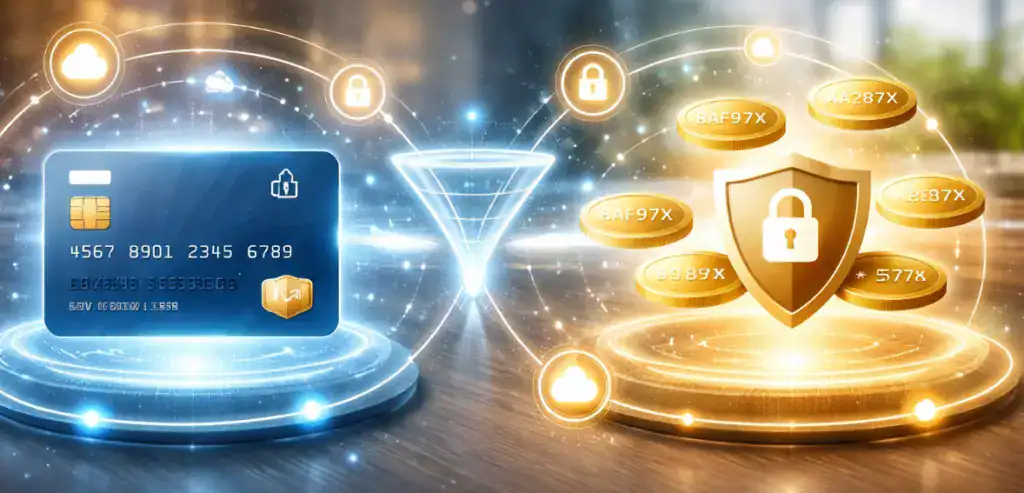
Payment tokenization is a data security method that replaces sensitive card information with a randomly generated value known as a token. This token acts as a reference to the real payment data but does not contain any usable information itself.
If a cybercriminal gains access to a token, they cannot use it because it has no meaning outside the secure payment system. The real card information remains stored in a protected environment known as a token vault.
A simple way to understand tokenization is to think of it like a valet parking ticket. When you give your car to a valet, you receive a ticket instead of carrying the car key information everywhere. The ticket only works within that specific system.
Similarly, tokenization replaces card data with a secure reference that only works inside the payment infrastructure.
This approach is widely used in secure card-on-file retail systems because it allows businesses to safely store payment credentials for future purchases.
Tokenization helps businesses reduce risk while supporting modern payment experiences such as recurring billing, one-click checkout, and digital wallets.
How Payment Tokenization Works Within Payment Systems
Although tokenization relies on sophisticated technology, the process follows a straightforward structure.
When a customer enters their card information during a transaction, the payment processor sends the data securely to a tokenization service. The service replaces the card number with a token and stores the real data securely.
The business then receives the token and stores it instead of the actual card information. When the customer makes another purchase, the token is used to process the payment without re-exposing the card number.
This process helps businesses achieve several important benefits:
- Reducing storage of sensitive payment data
- Supporting repeat purchases safely
- Enabling recurring billing
- Improving payment efficiency
- Lowering fraud exposure
- Supporting secure payment sharing across channels
Because tokens cannot be mathematically reversed to reveal the original card number, they significantly reduce the impact of data breaches.
This makes tokenization a foundational technology for omnichannel payment environments.
Why Tokenization Is Essential for Omnichannel Payment Security
Omnichannel payments require payment information to move securely across systems such as e-commerce platforms, POS devices, and mobile applications. Without tokenization, businesses would need to store card data in multiple systems, increasing the chances of security incidents.
Tokenization eliminates this risk by allowing systems to share tokens instead of card numbers.
For example, if a customer saves a payment method online and later shops in a store, the business can use the token associated with that payment profile rather than transferring sensitive card information.
This allows businesses to create connected customer experiences without increasing risk exposure.
Tokenization supports omnichannel payment environments by:
- Protecting cardholder data across channels
- Allowing secure payment reuse
- Supporting centralized payment profiles
- Improving reporting accuracy
- Reducing fraud risks
- Enabling safe cross-channel transactions
Businesses building modern commerce experiences rely on tokenization to maintain both convenience and security.
How Tokenization Enhances Security for Physical Store Payments
Despite the growth of e-commerce, physical retail locations remain a major part of the economy. Tokenization improves store payment security by ensuring sensitive card information is not stored inside POS environments.
Instead, tokens allow transactions to be processed while minimizing risk.
This becomes especially important as contactless payments, tap-to-pay cards, and mobile wallets become more common.
Tokenization helps retailers protect the following:
- Contactless card transactions
- Customer payment profiles
- Loyalty program integrations
- Gift card systems
- Refund processing
Retailers using secure card on file retail strategies also benefit from tokenization when offering stored payment experiences.
Key Benefits of Tokenization for Store Payments
- Faster checkout processes
- Reduced fraud exposure
- Safer payment storage
- Simplified return processing
- Increased customer trust
How Tokenization Improves Mobile Payment Security
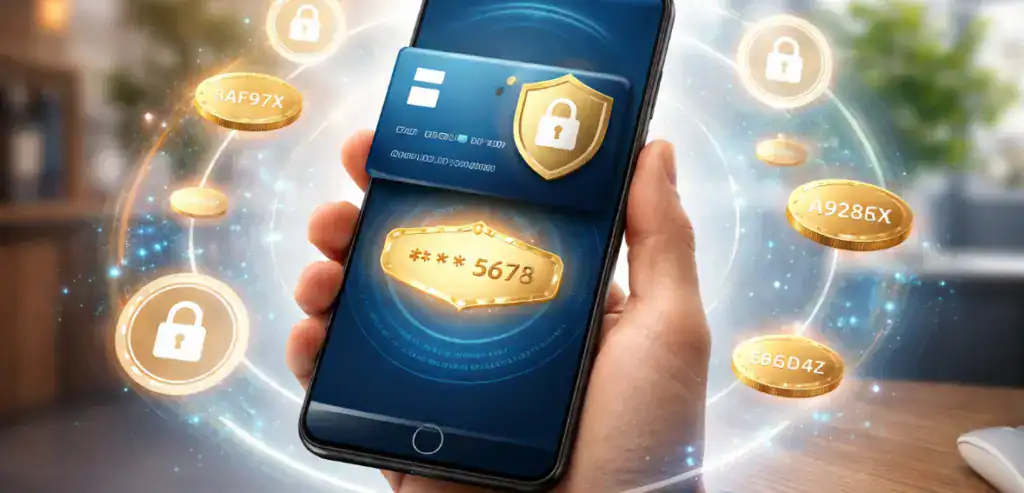
Mobile payments continue to expand because they offer convenience and speed. However, mobile environments require strong protection because devices can be lost or compromised.
Tokenization protects mobile transactions by ensuring card numbers are never stored directly on devices. Instead, tokens allow transactions to be processed safely through secure payment networks.
This enables businesses to provide modern mobile payment capabilities such as the following:
- Digital wallets
- In-app purchases
- Subscription services
- Express checkout
- Stored payment credentials
Mobile tokenization plays a major role in unified commerce payment security because it connects mobile transactions to broader payment systems securely.
Benefits of Mobile Tokenization
- No card data is stored on devices
- Reduced mobile fraud risk
- Secure recurring transactions
- Faster payment approvals
- Improved customer confidence
How Tokenization Protects E-commerce and Online Payments
Online businesses face constant security threats because attackers frequently target e-commerce databases containing payment information.
Tokenization reduces these risks by ensuring e-commerce systems do not store real card numbers. Instead, tokens are used to manage transactions safely.
Businesses using cloud payment tokenization also gain additional benefits by managing tokenized payment data through centralized cloud systems.
Tokenization allows e-commerce businesses to:
- Offer saved checkout options
- Enable subscription billing
- Reduce data breach impact
- Improve checkout speed
- Simplify compliance efforts
Online Tokenization Advantages
- Reduced exposure to payment data theft
- Secure payment storage
- Faster checkout experiences
- Lower compliance burden
- Stronger fraud defenses
How Tokenization Supports Card-on-File Payment Models
Card-on-file payment models allow businesses to store payment credentials for future use. This is common in subscription services, retail loyalty programs, and membership platforms.
Without tokenization, storing this data would create significant risks.
Tokenization enables secure card-on-file retail systems by replacing stored card numbers with secure tokens.
This allows businesses to:
- Enable subscription payments
- Support automatic billing
- Offer faster checkout
- Reduce payment friction
- Improve customer convenience
Benefits of Tokenized Card-on-File Systems
- Eliminates raw card storage
- Supports safe recurring billing
- Improves payment efficiency
- Reduces compliance risk
- Enhances customer experience
How Tokenization Helps Reduce PCI Compliance Burden
Payment security regulations require businesses to protect cardholder data carefully. The more sensitive data a business stores, the more complex its compliance responsibilities become.
Tokenization helps reduce this burden because fewer systems store real payment data.
By replacing card numbers with tokens, businesses may reduce the scope of their PCI security requirements.
This helps organizations:
- Reduce compliance costs
- Simplify audits
- Improve security controls
- Reduce breach liability
- Improve risk management
Tokenization does not remove compliance requirements completely, but it can make security management significantly easier.
This is why tokenization is widely adopted within omnichannel payment infrastructures.
Fraud Prevention Benefits of Payment Tokenization
Fraud prevention remains one of the biggest reasons businesses adopt tokenization. Because tokens cannot be used outside their intended systems, stolen payment data becomes far less valuable.
Tokenization also works alongside fraud detection tools to improve transaction monitoring.
Tokenization helps fraud prevention by:
- Limiting access to card data
- Supporting secure transaction validation
- Reducing the value of stolen data
- Supporting authentication controls
- Allowing better transaction monitoring
Fraud Reduction Benefits
- Lower fraud losses
- Fewer chargebacks
- Better payment verification
- Safer data storage
- Improved transaction visibility
Best Practices for Businesses Implementing Tokenization
Businesses should approach tokenization strategically to achieve the best results. Proper planning ensures both security and operational benefits.
Organizations should focus on integrating tokenization into their payment systems rather than treating it as an isolated tool.
Tokenization Implementation Best Practices
- Work with trusted payment providers
- Combine tokenization with encryption
- Control access to payment systems
- Monitor transaction activity regularly
- Maintain security testing programs
- Train staff on payment security practices
The Future Role of Tokenization in Commerce

Tokenization will continue to play an important role as payment technology evolves. Emerging payment innovations will depend heavily on secure payment credentials.
Future payment trends expected to rely on tokenization include biometric payments, smart device commerce, and AI-driven fraud detection.
Future Tokenization Trends
- Expansion of network tokenization
- Device-specific payment tokens
- Identity-based payment authentication
- AI fraud monitoring systems
- Real-time payment security tools
Conclusion
Tokenization has become a critical technology supporting modern payment ecosystems. As customers expect seamless experiences across stores, mobile devices, and online platforms, businesses must provide both flexibility and strong protection.
Payment tokenization allows organizations to replace sensitive card information with secure tokens that reduce risk while enabling efficient transactions. This helps businesses improve fraud protection, simplify compliance responsibilities, and create better customer experiences.
From enabling omnichannel payments to supporting secure card storage and cloud-based payment environments, tokenization plays a central role in modern commerce infrastructure.
Businesses that invest in tokenization are not only improving their current payment security, but also They are also building a strong foundation for future growth, customer trust, and payment innovation.
Organizations that prioritize tokenization today position themselves to deliver safer, smarter, and more connected payment experiences in the years ahead.
FAQs
What is payment tokenization?
Payment tokenization is a security process that replaces card numbers with secure tokens that cannot be used outside the payment system.
Why is tokenization important for omnichannel payments?
Tokenization allows businesses to securely use the same payment credentials across store, mobile, and online channels without exposing sensitive card data.
Does tokenization remove PCI compliance requirements?
No. Tokenization reduces the amount of sensitive data stored, but businesses must still follow PCI security standards.
Can small businesses benefit from tokenization?
Yes. Tokenization helps businesses of all sizes improve payment security, reduce fraud risk, and support modern checkout experiences.
Does tokenization slow down payments?
No. In most cases, tokenization actually speeds up transactions because stored tokens allow faster payment processing.